
There is a moment that almost every small business owner experiences.
You've finally launched your website. You've spent hours choosing colours that feel like your brand, rewriting your About page until it sounds like you, and making sure every photo feels polished and professional. Maybe you've even had a few people tell you how beautiful it looks.
Then, after the excitement settles, a different question starts to creep in.
"If my website is live... why isn't anyone finding it?"
It's an understandable question, especially when you've invested so much time into creating something you're proud of. We tend to think that once a website is published, it should naturally begin attracting visitors. After all, that's what it's there for, isn't it?
But that's not quite how the internet works.
A website isn't like opening a storefront on a busy street where people naturally walk past your window. It's more like building a beautiful little shop tucked away on a quiet road. Unless people know it's there—or unless something points them in your direction—they may never discover it at all.
That's where SEO comes in.
Unfortunately, SEO (or Search Engine Optimization) has become one of those topics that feels far more intimidating than it needs to. If you've ever searched for advice online, you've probably found yourself bouncing between articles about keywords, backlinks, metadata, page speed, schema markup, search intent, internal linking, domain authority, and about twenty other terms that sound like they require a degree in computer science.
It's no wonder so many business owners eventually decide that SEO is something they'll "figure out later."
I'd like to offer a different perspective.
Because while there is a technical side to SEO—and it's an important one—good SEO isn't built on tricks or hacks. It's built on thoughtful decisions that help search engines understand your website and help real people feel confident they've landed in the right place.
That's a much more approachable place to begin. And if you're a service provider running your business on Squarespace, it's also much more achievable than you might think.
The Biggest Misunderstanding About SEO
One of the reasons SEO feels so overwhelming is because it's often presented as though there's one magical ingredient you're missing.
Someone tells you it's all about blogging. Another person insists you need better keywords. Someone else says page speed is everything. Then you hear that you need backlinks, or local citations, or a better Google Business Profile.
Individually, none of those things are wrong. They're simply incomplete.
The truth is that SEO isn't one task you check off a list. Great SEO is the result of dozens of small decisions working together over time.
I often compare it to building a home. Imagine walking through a newly finished house and asking the builder what made it stand so beautifully.
Was it the foundation?
The framing?
The roof?
The electrical work?
The windows?
The paint colour?
The answer, of course, is all of them. Remove any one of those pieces and the house doesn't function the way it was designed to. SEO works much the same way.
Your page titles help search engines understand what each page is about.
Your headings create structure.
Your images need descriptive alt text.
Your website needs to load efficiently.
Your navigation should make sense.
Your content should answer the questions people are actually searching for.
Your internal links help Google understand how different pages relate to one another.
Your service pages need to clearly explain what you do.
None of these things guarantees first-page rankings on their own. But together, they create a website that's easier to understand, easier to trust, and ultimately easier to find.
That's why I rarely think about SEO as one service. I think about it as the foundation that supports everything else your website is trying to do.
Is Squarespace Actually Good for SEO?
Let's clear up one myth while we're here.
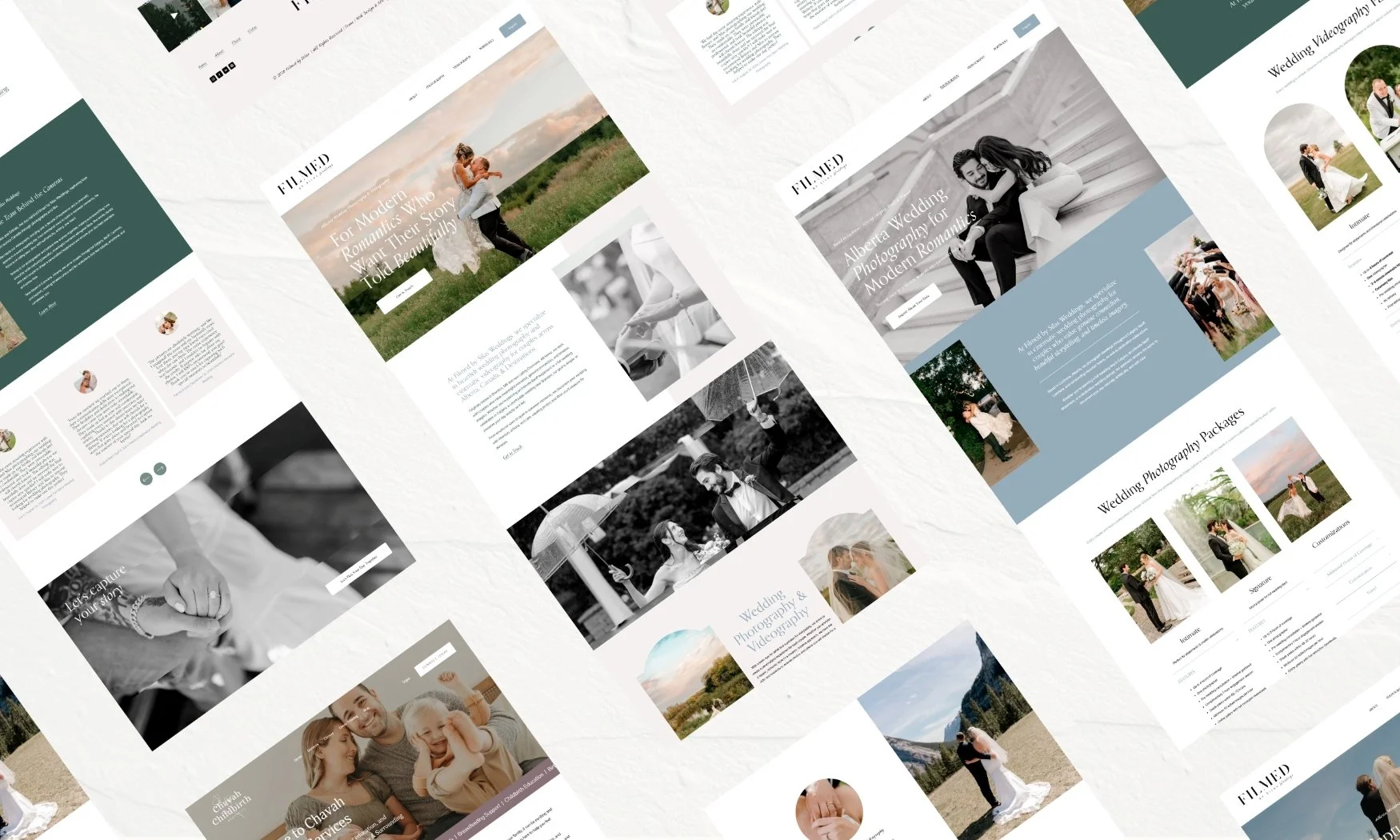
You've probably heard someone say that Squarespace isn't good for SEO. And, honestly, I think that’s based on a very limited experience with Squarespace.
Modern Squarespace websites come with a surprisingly strong technical foundation. They include SSL security, automatically generate XML sitemaps, create clean URLs, provide responsive layouts, and allow you to customize important SEO elements like page titles, meta descriptions, image alt text, and URL slugs.
Those are all valuable tools.
What Squarespace doesn't do—and shouldn't be expected to do—is make strategic decisions for your business.
It doesn't know which keywords your ideal clients are searching for.
It can't write meaningful service pages.
It doesn't understand how your offers connect to one another.
It won't automatically create helpful blog content that answers your audience's questions.
And it certainly can't replace the experience of someone who understands how all of those pieces work together.
That's why I often tell clients that Squarespace gives you a solid foundation. The strategy is what transforms that foundation into a website that works.
A Website Has Two Audiences
This is one of my favourite ways to explain SEO because it's simple enough to remember every time you update your website.


Every page you publish has two audiences. The first is the person reading it. The second is Google.
The challenge is that many websites unintentionally focus on one while forgetting the other.
Sometimes I see websites that are absolutely beautiful. The photography is stunning. The branding is thoughtful. Every page feels elevated and polished.
But after reading the homepage, I still don't know exactly what the business does.
Those websites were designed entirely for people, but they forgot that search engines need context too.
On the other hand, I've also seen websites that are packed with keywords because someone was trying to "do SEO."
The pages technically mention every service imaginable, but they don't sound like a real person wrote them. They feel repetitive, awkward, and difficult to connect with.
Those websites were written for Google while forgetting the human sitting behind the screen. Neither approach works particularly well. Good SEO lives somewhere in the middle.
It's about writing naturally while being intentional, and creating pages that are enjoyable to read while still giving search engines enough information to understand what your business actually offers.
When those two audiences are considered together, something interesting happens. Your website becomes easier to find, but it also becomes easier to trust.
clarity is one of the kindest things you can give your audience.
Why Clarity Still Matters
At this point, you might be wondering why designers talk so much about clarity if technical SEO is equally important to get found on search engines.
The answer is surprisingly simple. Technical SEO helps people arrive. Clarity helps them stay.
Imagine someone searching for a Wedding photographer in Alberta. After browsing a few search results, they click through to your homepage.
Within seconds, they're trying to answer a handful of questions.
Am I in the right place?
Do they work with businesses like mine?
Can they solve the problem I'm experiencing?
Do I trust them?
Good design supports those answers.
Good copy supports those answers.
Thoughtful SEO helps them arrive in the first place. That's why I don't think website strategy, design, messaging, and SEO should ever be treated as separate conversations. They're all trying to accomplish the same thing. To help the right people confidently move toward the right business.
Unfortunately, our industry has a habit of separating these disciplines into neat little boxes. One person talks about branding. Another talks about SEO. Someone else specializes in copywriting.
While each area deserves expertise, your website doesn't experience them separately. It experiences them together. And that's exactly how your visitors experience them too.
When someone lands on your website, they aren't evaluating your metadata, your typography, and your page hierarchy one by one.
They're asking themselves one simple question: "Does this feel like the right fit?"
Every thoughtful decision you've made contributes to that answer. And that's why SEO is so much more than keywords.
It's part of a much bigger conversation about creating a website that works—for search engines, yes, but more importantly, for the people you're hoping to serve.
Why Blogging Still Matters (Even in 2026)
Every few months, someone declares that blogging is dead. Usually it's because social media has changed, AI has become more capable, or a new platform has captured everyone's attention. It's an easy headline to write because it gets clicks. But from where I sit as a website designer and SEO strategist, it doesn't reflect what's actually happening.
People are still searching. Every single day, millions of people open Google and ask questions they genuinely want answers to.
Some are practical.
"How long does a Squarespace website take to build?"
"Is Squarespace good for SEO?"
"Do I need branding before I redesign my website?"
Others are much more personal.
"Why isn't my website getting inquiries?"
"How do I know if my website is working?"
"How do people even find my business online?"
Those searches haven't disappeared. If anything, they've become more conversational because that's how we naturally use search now. We aren't searching for isolated keywords anymore—we're asking complete questions and expecting thoughtful answers.
That's exactly where blogging still shines. A blog isn't simply another piece of content to publish because someone told you consistency is important. It's an opportunity to answer a question before someone ever becomes a client.
Think about your own habits for a moment. When you're researching something new, you're probably not looking to buy immediately. You're trying to understand by gathering information, comparing options, and looking for someone who explains things in a way that makes sense.
The businesses that consistently create helpful, thoughtful content become part of that journey. Long before someone fills out a contact form, trust has already started to form because they've spent time learning from you.
That's something social media rarely accomplishes on its own. An Instagram post might introduce someone to your work. A blog gives them a reason to stay.
Search Intent Changes Everything
One of the concepts I wish more business owners understood is something called search intent.
It sounds technical, but the idea is actually quite simple. Every search begins with a purpose.
When someone types "website designer" into Google, they could be looking for inspiration, comparing agencies, researching prices, or hoping to hire someone today. Google has to make an educated guess about which results will best match that intention.
That's why writing for search isn't about repeating keywords over and over again. It's about understanding what someone is really hoping to find. Imagine someone searching for:
"How to improve SEO on Squarespace."
They're probably not looking for a sales page. They're looking for guidance.
If they instead land on an article that patiently explains the fundamentals, answers common questions, and gives them confidence in what to do next, Google sees that as a positive experience.
The same idea applies to every page on your website. Your homepage serves a different purpose than your About page. Your service pages answer different questions than your blog. Your contact page has a completely different job than your portfolio.
Good SEO isn't about making every page do everything. It's about helping each page accomplish the purpose it was designed for. That's one of the reasons I enjoy designing websites as much as I enjoy optimizing them.
Website strategy isn't about arranging content until it looks nice. It's about understanding the journey someone is taking and making that journey feel natural from beginning to end.
More Traffic Isn't Always Better
If you've spent any time reading marketing advice, you've probably heard someone celebrate website traffic.
Ten thousand visitors. Fifty thousand page views. Hundreds of clicks every day. Those numbers can sound impressive, but they don't always tell the whole story.
I'd much rather help a local photographer welcome fifty people who are genuinely looking for a photographer in their city than five thousand people who happened to stumble across a viral blog post but will never become clients.
The same is true for almost every service-based business.
You're not trying to attract the entire internet. You're trying to connect with the people who already need what you offer.
That's why I think one of the most overlooked parts of SEO is relevance. The words on your website should make it obvious who you help. Your services should clearly describe what you offer. Your location should be easy to understand if you serve a specific community. Your blog should answer questions your ideal clients are already asking.
When all of those pieces align, something interesting happens. The people arriving on your website begin to feel more like the right people. That's ultimately far more valuable than simply increasing traffic.
The Technical Work You Never See
Earlier, we talked about how SEO isn't just one thing.
This is where that idea becomes especially important. Some of the most valuable SEO work happens behind the scenes.
It's the work visitors will probably never notice, but search engines absolutely do.
Things like…
Making sure your website can be crawled correctly.
Creating descriptive page titles and meta descriptions.
Optimizing image sizes so pages load quickly.
Structuring headings properly.
Setting up redirects when pages move.
Making sure your sitemap is accurate.
Improving internal linking.
Adding descriptive alt text to images.
Fixing broken links.
Reviewing indexing issues.
These tasks aren't glamorous.
No one's going to comment on Instagram because your canonical tags are beautifully configured. But they matter. They create the foundation that allows everything else on your website to perform better.
This is one of the reasons I think SEO is often misunderstood. When it's done well, it almost becomes invisible.
Visitors simply experience a website that's easy to navigate, loads quickly, answers their questions, and helps them feel confident moving forward. They don't see the hours of thoughtful work that made that experience possible.
That's okay. They're not supposed to.

Why SEO Is an Investment, Not a Marketing Trend
One of the things I appreciate most about SEO is that it encourages patience.
That's probably not a popular thing to say in a world where we're constantly promised overnight results, but I think it's true.
SEO rewards businesses that consistently create value over time. A thoughtful service page written today could still be helping people discover your business two years from now. A helpful blog post might continue answering questions long after you've forgotten the day you published it. Every improvement builds on the one before it.
That's very different from social media, where a post often has a lifespan of a few days. I love Instagram. It's a wonderful place to connect, tell stories, and build relationships. But your website is where those relationships deepen. It's the one place online that you completely own.
No changing algorithm can take away a well-written article that's been steadily bringing people to your website for years. No platform update can remove a thoughtfully structured service page that continues helping the right clients understand exactly what you offer. That's why I encourage clients to think about SEO as an investment in their future business, not simply another marketing task to check off each month.
You're building something that compounds. Something that quietly grows stronger every time you make another thoughtful improvement.
So...Why Isn't Your Website Getting Found?
After everything we've talked about, you might still be hoping for a single answer. I understand that!
But the honest answer is that there usually isn't one.
Sometimes your website needs stronger technical SEO.
Sometimes it needs better page structure.
Sometimes your services aren't clear enough.
Sometimes you've simply never created content around the questions your audience is searching for.
More often than not, it's a combination of several small opportunities rather than one major problem.
And strangely enough, I think that's encouraging. Because it means your website isn't broken. It's growing. Like any part of your business, it benefits from thoughtful attention, regular improvements, and a strategy that's built for the long term rather than quick wins.
That's exactly what the Get Found pillar at Endeavor is all about. Not chasing every new SEO trend or trying to hack Google. And certainly not convincing you that one checklist will transform your business overnight.
It's about understanding how all of the pieces of your website work together—from technical SEO and website structure to messaging, blogging, and thoughtful design—so the right people can find you with confidence.
An Endeavor Note
I don't think the goal of SEO is to become the loudest voice online.
I think it’s to create a website that's clear enough for search engines to understand, helpful enough for people to trust, and strong enough to keep working while you're doing the work you love.
Because that's what a good website should do.
It shouldn't demand more of your time every single day. It should become part of the steady foundation your business is built on.
The kind of foundation that keeps welcoming the right people in, whether you're sitting at your desk on a Monday morning, out for a walk on a sunny afternoon, or taking a well-earned weekend away.
To me, that's what it really means to get found… Just more of the right people finding the business you've worked so hard to build.

Ready to Build a Website That's Easier to Find?
Whether you're starting from scratch or wondering why your current website isn't bringing in the inquiries you'd hoped for, you don't have to figure it all out alone.
At Endeavor Design Studio, I believe thoughtful design and intentional SEO go hand in hand.
If that sounds like the kind of foundation you're looking for, I'd love to help you build it.
